
Request a Demo
→
On March 30, Google Quantum AI published a paper showing that future quantum computers could break the cryptography protecting Bitcoin, Ethereum, and virtually every other blockchain, with far fewer resources than previously thought.
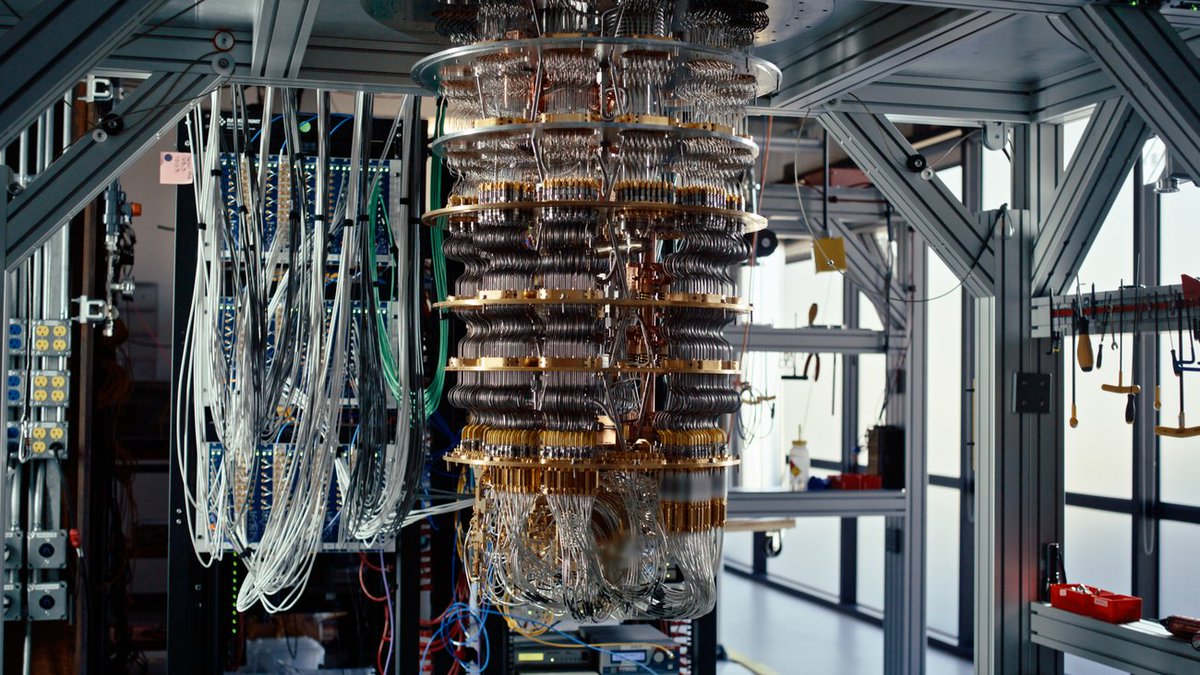
A companion paper published the same day by Oratomic, a startup founded by researchers from Caltech and Harvard, showed that a different type of quantum computer (neutral-atom) could do it with as few as 10,000 atomic qubits, down from previous estimates of one million or more. Oratomic co-founder Manuel Endres has already trapped arrays of 6,000 atomic qubits, though making qubits compute reliably at scale remains a harder problem than simply building bigger arrays.
No quantum computer is close to being able to execute this attack today. But the gap is closing, and most of the crypto industry is not ready.
A brief primer on the underlying cryptography, since it’s central to evaluating the risk.
Today’s blockchains secure transactions using elliptic curve cryptography. The security rests on a simple asymmetry: it’s easy to generate a public key from a private key (a simple multiplication along a curve), but reversing the process — figuring out the private key from the public key — is so computationally expensive that classical computers can’t do it in any reasonable timeframe.
Shor’s algorithm, discovered in 1994, gives quantum computers a shortcut for this class of problem. It exploits quantum properties to find the hidden pattern in the math of elliptic curve cryptography, which lets quantum computers deduce the private key from the public key in minutes. The algorithm has been known for three decades; what’s been missing is hardware powerful enough to run it at the scale needed to crack real-world keys. That’s what’s now changing.
The fix is to move from elliptic curve cryptography to hash-based cryptography. Instead of relying on a structured mathematical problem that quantum computers can reverse, hash functions compress data into a fixed-length output that is computationally infeasible to reverse — and crucially, there’s no hidden mathematical structure for a quantum computer to exploit. No known quantum algorithm offers a meaningful shortcut against them, and this is the foundation of post-quantum cryptography.
So how close are we? According to Ethereum Foundation researcher Justin Drake, who co-authored the Google paper, there is “at least a 10% chance” that a cryptographically relevant quantum computer emerges by 2032. Various experts in the field place so-called “Q-day” somewhere in the 2030s.
A 10% probability within six years may sound low, but this is a tail risk analysis. In digital assets, where the entire value proposition rests on cryptographic security, tail risks to the cryptography itself deserve disproportionate attention, and three factors make this one difficult to dismiss.
First, progress is nonlinear. The physical qubit threshold for breaking elliptic curve cryptography has dropped rapidly — from roughly 9 million physical qubits in 2023 to under 500,000 on superconducting architectures in the latest Google paper. Resource estimates for the broader class of Shor’s algorithm attacks have fallen by orders of magnitude over the past decade.
Second, progress is increasingly private. The Google paper was published with an unprecedented step: a zero-knowledge proof validating the results without disclosing the actual attack circuits. Drake noted that governments may begin intervening in the publication of quantum algorithmic improvements. The state of the art may be ahead of what is publicly known.
Third, AI may accelerate the timeline. The same AI systems improving software development and mathematical proof verification could potentially be applied to quantum algorithm optimization — a domain where relatively simple observations have already yielded order-of-magnitude improvements.
There is, however, an important counterweight: in cryptography, it is fundamentally easier to defend than to attack. AI is already being used to formally verify cryptographic schemes and discover stronger constructions, and these defensive applications scale more naturally than offensive ones. Ethereum’s choice of hash-based cryptography — which contains no structured mathematical objects for an adversary to exploit — is designed to be resilient against both quantum and AI-driven attacks.
Google has set a 2029 deadline for migrating its own products and infrastructure to post-quantum cryptography. This is the clearest signal available from the organization closest to the frontier.
Every major blockchain relies on elliptic curve cryptography for transaction signing, and all must eventually migrate to post-quantum alternatives. But the scope of the challenge, the readiness of the response, and the governance capacity to execute differ substantially across networks.
Ethereum
Ethereum’s post-quantum effort is the most advanced among major blockchains. The Ethereum Foundation has been funding post-quantum research since 2018, when it issued a $5 million grant for hash-based SNARK research. Today the effort includes a dedicated post-quantum team, a public roadmap targeting full deployment by 2029, weekly engineering calls, live test networks with approximately ten client teams, and a $1 million cryptographic bounty program.
The migration addresses all three cryptographic layers of the Ethereum stack — consensus, data availability, and execution — each of which currently relies on elliptic curve-based schemes that are quantum-vulnerable. The Ethereum Foundation is developing signature aggregation technology that compresses thousands of individual post-quantum signatures into a single compact proof per block, designed to eliminate the throughput penalty that larger post-quantum signatures would otherwise impose.
According to Drake, who co-authored the Google paper and leads portions of the post-quantum research effort, the 2029 target is “realistic/conservative.” He points to the Merge — Ethereum’s 2022 migration from proof-of-work to proof-of-stake — as evidence of the network’s capacity to execute complex protocol upgrades. The Merge shipped on a live multi-hundred-billion-dollar network, without disruption. The post-quantum migration is on a comparable scale, and the same institutional capacity is executing it.
When Ethereum upgrades to post-quantum cryptography, active users will migrate their coins to new quantum-safe addresses. One risk lies in coins that can’t be migrated because the private keys are lost or the owner has died. These coins would remain in quantum-vulnerable addresses indefinitely, exposed to any future attacker with a sufficiently powerful quantum computer. For Ethereum, this quantum-vulnerable supply is estimated at roughly 2%, which is about one fifth of Bitcoin’s because the network is younger and had a market price from launch, which incentivized better key management.
As of this writing, Ethereum is the only major blockchain with a credible, detailed, actively-shipping post-quantum roadmap targeting completion before most experts’ Q-day estimates.
Bitcoin
Bitcoin faces the same elliptic curve vulnerability but with a more challenging upgrade path. In all likelihood, Bitcoin will address it — over $1.5 trillion in value at stake creates powerful incentives, and the network has a track record of navigating difficult upgrades when the stakes are high enough. BIP-360, a post-quantum migration proposal, has received extensive community engagement.
That said, even prominent Bitcoin advocates have acknowledged a gap in urgency. Nic Carter, founding partner at Castle Island Ventures and historically one of Bitcoin’s most prominent advocates, has described Ethereum’s quantum approach as “best in class” and Bitcoin’s current posture as “worst in class.” In his assessment, “Elliptic curve cryptography is on the brink of obsolescence. Whether it’s 3 or 10 years; it’s over and we need to accept that. The only thing that matters is how quickly blockchain developers recognize that they need to bake in cryptographic mutability into their networks.”
Bitcoin’s development culture tends to treat the protocol as a finished product rather than an evolving system, which is a strength for monetary credibility, but a liability for a nascent technology. The community will also need to navigate the 5-15% of quantum vulnerable supply — including approximately 1 million BTC in Satoshi-era addresses. The most likely outcome is that these coins are frozen or burned, but the debate will take time.
Bitcoin’s declining security budget illustrates the same underlying tension between near-term stability and long-term viability in the community. Bitcoin’s security depends on mining rewards that halve every four years, with the long-standing assumption that transaction fees will eventually compensate miners. But fees currently represent just 0.6% of miner revenue from block rewards. Treating the halving schedule and the 21 million supply cap as permanently settled leaves no obvious mechanism to address this decay, and the problem compounds with every subsequent halving. Ethereum, by contrast, addressed this concern directly when it migrated to proof-of-stake.
Solana and Other High-Throughput Chains
Post-quantum hash-based signatures are substantially larger than classical signatures (in some schemes, by two orders of magnitude). Any blockchain that natively swaps in post-quantum cryptography – without the kind of aggregation technology Ethereum is developing to compress signatures – faces a significant reduction in throughput. For Bitcoin, where signatures account for the majority of transaction weight, this could reduce effective throughput from roughly 3-7 transactions per second to well under 1.
The impact is particularly severe for chains that built their competitive position on raw transaction speed. Solana, for example, exposes all public keys by default and would need to upgrade its entire signature infrastructure. The network has experimented with optional quantum-safe vaults, but a comprehensive migration would narrow the throughput advantage that has been its primary differentiator. In a post-quantum environment, competition shifts toward liquidity network effects, security, decentralization, and developer ecosystem — dimensions where Ethereum currently holds structural advantages.
Quantum readiness is becoming a material risk factor for digital asset allocation. Jefferies has already removed Bitcoin from model portfolios citing quantum vulnerability. As awareness of the threat grows — and as the gap in preparedness across networks becomes more visible — investors and the institutions building on these networks will increasingly differentiate between those with credible post-quantum migration paths and those without.
ETH does not appear to reflect a quantum-readiness premium. The asset trades at multi-year lows relative to BTC for several reasons: L1 revenue concerns, L2 value-capture questions, and shifting market narratives among them. Quantum readiness is not the primary driver of ETHBTC today, but quantum risk has begun to be priced into BTC (via Jefferies and reported fund deweighting) while the corresponding quantum opportunity does not appear to have been priced into ETH at all. As Nic Carter put it, “ETH people have already figured this out. Everyone else seems to be petrified in fear. Unless something changes quickly, ETHBTC will start to reflect the divergence in prioritization.” Bitcoin’s 2017 block size war demonstrated how contentious even modest upgrades can become; the post-quantum migration is significantly more complex. As Ethereum’s roadmap milestones ship over the next 12-18 months — test networks maturing, post-quantum cryptography reaching security thresholds, lean consensus implementations going live — quantum readiness may emerge as an incremental catalyst, particularly if Ethereum becomes the first post-quantum store of value.
Tokenization infrastructure requires long-duration cryptographic assumptions. Tokenized treasuries, real estate, and credit instruments have 10- to 30-year durations. Institutional allocators building on-chain infrastructure for these assets will increasingly weigh quantum migration capability as a threshold requirement. A network that cannot credibly demonstrate a post-quantum path by the end of this decade faces a disadvantage in attracting long-duration institutional capital.
Google paper co-author Justin Drake recently described a shift in his own thinking that captures the broader dynamic: “I’ve stopped thinking about post-quantum as a hurdle that we have to overcome, and I think of it more as an opportunity. It’s an opportunity for Ethereum to stand out as the very first global financial system that is post-quantum secure — not just relative to its competitors, but also relative to fiat.”
Whether that vision is fully realized or not, the divergence in preparation is already observable. Quantum progress is nonlinear, increasingly private, and genuinely unknowable. Nobody — not Google, not the Ethereum Foundation, not the most credentialed quantum physicist in the world — can specify when Q-day arrives. But the networks that are building under these conditions of uncertainty, rather than waiting for certainty that may never come, are the ones most likely to endure.
Disclosure: This analysis is published by Etherealize, an organization focused on institutional Ethereum adoption. The author and Etherealize may hold positions in ETH and other digital assets discussed. This is not investment advice.


